Jill & The Gems
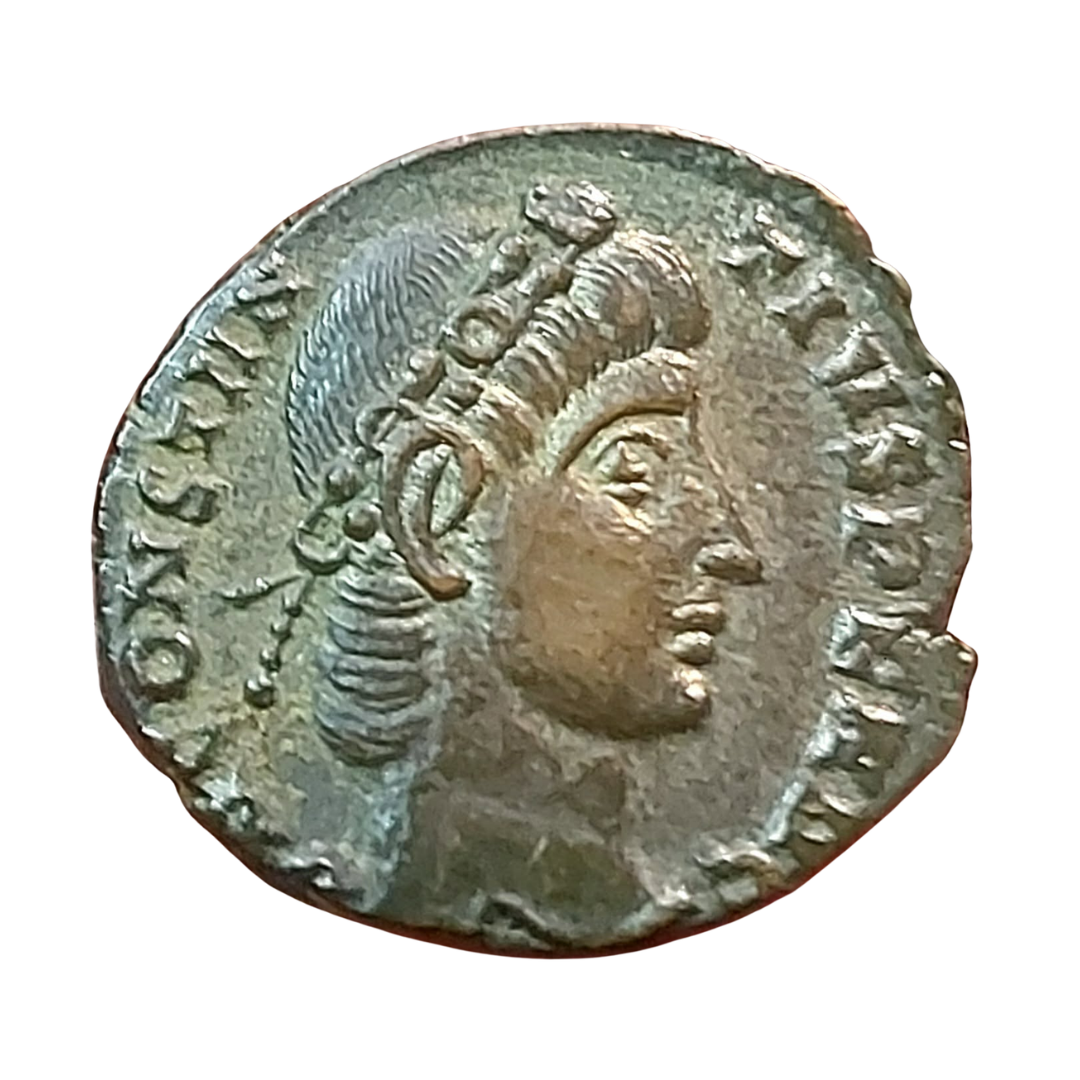
Roman Empire AE Follis of Constantius II (AD 337–361)
Roman Empire AE Follis of Constantius II (AD 337–361)
Couldn't load pickup availability
A genuine bronze AE follis struck during the reign of Constantius II, son of Constantine the Great and one of the last emperors to rule the Roman Empire before its permanent division into Eastern and Western halves. His reign was marked by military campaigns, political intrigue, and the continued transformation of the Roman world.
This coin circulated during a pivotal era in late antiquity. Constantius II inherited an empire reshaped by his father and spent much of his reign defending its frontiers against Persian invasions while navigating internal power struggles. Under his rule, Christianity continued to grow in influence, further defining the cultural and political identity of the late Roman Empire.
This specimen was acquired directly from detectorist Marius Staszak, who personally recovered it through legal metal detecting activities in Europe. Based on information provided by the finder, this coin forms part of a collection of Roman and medieval coins recovered during a 2025 metal-detecting expedition through Romania and Bulgaria. The exact recovery location for this specimen was not documented at the time of discovery.
Each coin includes a printed provenance record documenting its acquisition directly from the finder and its cataloging into the Jill and the Gems historical collection.
Details
- Emperor: Constantius II
- Reign: AD 337–361
- Type: Roman Empire AE Follis (Bronze)
- Collection Number: JTG-R-036
- Provenance: Acquired directly from the finder
- Includes: Printed provenance record
Historical Highlights
- Son and successor of Constantine the Great.
- Defended the Roman Empire against repeated invasions by the Sasanian Persian Empire.
- Oversaw the continued expansion of Christianity throughout the empire.
- Ruled during one of the final generations before the Roman Empire permanently divided into Eastern and Western empires.
- This coin circulated more than 1,650 years ago.
Share